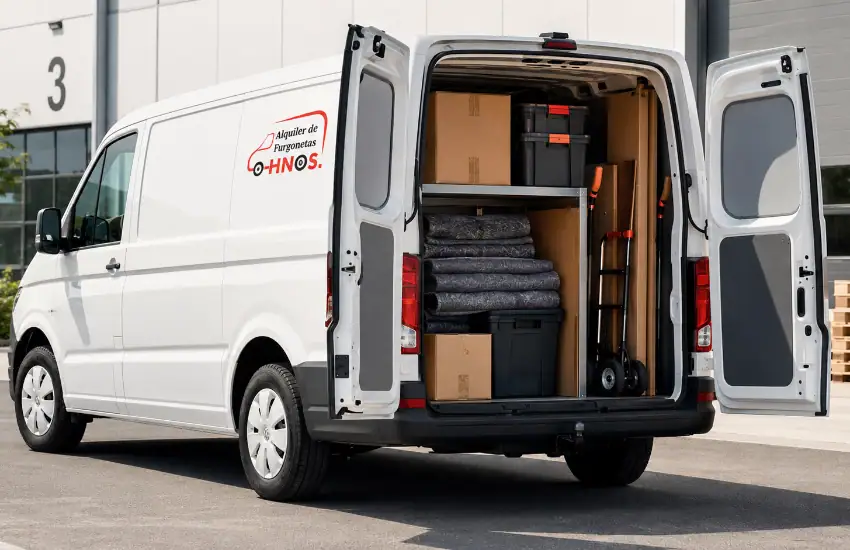
Knowing how to calculate the volume and weight of your load before hiring a van is essential when organising a move, transporting furniture, moving goods or carrying boxes without unexpected problems. Many people book a vehicle based only on the number of items they need to move, without considering the actual space those items occupy or their approximate total weight. This lack of planning can mean the van is too small, more journeys are needed, or the load is not distributed correctly.
At Furgonetas Piqueras, we recommend taking a few minutes to measure, estimate and organise your load before hiring a van. You do not need to carry out complex calculations, but it is useful to have an approximate idea of the volume, weight and type of items you are going to transport. This planning helps you choose the right vehicle and complete the move in a more comfortable, organised and efficient way.
Why It Is Important to Calculate Volume and Weight Before Hiring a Van?
Calculating the volume and weight before booking allows you to make better decisions from the start. Volume tells you how much space the items will take up inside the vehicle. Weight, on the other hand, helps you understand how the load should be distributed and what type of van may be most suitable.
Transporting boxes of clothing is not the same as transporting boxes of books, just as moving a mattress is very different from carrying tools, appliances or building materials. Some items take up a lot of space but weigh very little, while others are compact but heavy.
When you have an initial estimate, you can avoid common mistakes such as hiring a van that is too small, making more trips than necessary or loading the vehicle in an impractical way. It also becomes easier to prepare protective materials, strong boxes, blankets, straps or securing equipment.
How to Calculate Load Volume
To calculate load volume, the basic formula is very simple:
Length x width x height = volume
The result is expressed in cubic metres, so the measurements must be converted into metres. For example, if a box measures 60 cm long, 40 cm wide and 40 cm high, you first need to convert those measurements:
- 60 cm = 0.60 m
- 40 cm = 0.40 m
- 40 cm = 0.40 m
The calculation would be:
0.60 x 0.40 x 0.40 = 0.096 m³
If you have 10 identical boxes, the approximate volume would be:
0.096 x 10 = 0.96 m³
You would then need to add the volume of furniture, appliances, suitcases, tools, bicycles, goods or any other items that will also be transported in the van.
Group Items by Size and Shape
A practical way to estimate the volume of a move or transport job is to group items by category:
- Small, medium and large boxes.
- Dismantled furniture.
- Household appliances.
- Mattresses, bed bases or sofas.
- Long items such as shelves, boards or poles.
- Irregular items that cannot be stacked easily.
This method helps you visualise the real amount of space you need. It also helps you identify which items will determine the size of van required. A sofa, mattress or dismantled wardrobe can define the minimum vehicle size, even if the rest of the load is not particularly large.
How to Calculate the Approximate Weight of the Load
Calculating load weight is not always exact, but you can make a useful estimate. The first step is to check labels, technical specifications or product documentation whenever available. This is especially useful for appliances, tools, machinery, commercial packages or packed goods.
For boxes, it is useful to estimate the weight according to their contents. A box of clothing is usually light, but a box of books, crockery, tiles or tools can weigh much more than expected.
A good recommendation is not to fill large boxes with heavy items. It is better to divide the contents into several medium-sized boxes, which are easier to move, stack and place inside the van.
Always Add Extra Margin
When calculating load volume and weight before hiring a van, it is advisable to add an extra margin. In many moves, last-minute items appear: bags, lamps, plants, small appliances, unfinished boxes or accessories that had not been considered.
This margin also allows you to organise the load better inside the vehicle. Filling the van to the limit can make it harder to secure the items and make unloading more uncomfortable.
Before booking, it is also important to check the vehicle’s capacity information and avoid exceeding the recommended maximum load. If you are unsure, it is best to ask for advice before hiring.
Difference Between Volume and Weight: They Do Not Always Match
One of the most common mistakes is assuming that a large load will always be heavy, or that a small load will be easy to transport. In reality, volume and weight do not always go hand in hand.
A mattress, sofa or several chairs can take up a lot of space without being particularly heavy. On the other hand, boxes of books, tools, tiles, metal parts or building materials can take up little room but add considerable weight.
That is why, when choosing a van according to your load, you need to consider both factors. Volume determines the space required. Weight affects how the items should be distributed and which vehicle is most suitable.
You should also consider the shape of the load. Rectangular and stackable items usually make better use of space. Irregular furniture, fragile items or objects that cannot be placed on top of one another require more margin
Common Mistakes When Estimating a Load Before Hiring a Van
Before hiring a van, it is worth avoiding some common mistakes that can complicate the move.
Not Measuring Large Items
Sofas, mattresses, tables, dismantled wardrobes and appliances should be measured beforehand. These items are often the ones that determine whether a van is suitable or not.
Only Counting the Number of Boxes
Saying “I have 25 boxes” does not provide all the necessary information. You also need to consider their size, weight and whether they can be stacked without damaging the contents.
Forgetting About Packaging
Blankets, cardboard, plastic wrap, corner protectors and special packaging slightly increase the total volume. If you are transporting delicate furniture, this extra space should be included in your estimate.
Ignoring Access Points
Corridors, lifts, stairs, ramps, garages and loading areas can all affect how the move is organised. It is not only about what fits in the van, but also how the load can be loaded and unloaded.
Not Leaving Space to Secure the Load
A van filled to the limit can make it difficult to use straps, blankets or separators. Leaving some extra space helps you transport items in a more organised way.
Tips for Choosing the Right Van for Your Load
To know what van you need to hire, consider the volume, weight, journey distance and ease of loading. A small move does not require the same vehicle as transporting heavy goods or moving bulky furniture.
At Furgonetas Piqueras, we recommend reviewing in advance what you are going to transport, estimating the total volume, calculating the approximate weight and comparing the available options. If the load includes large furniture, many items or objects that are difficult to stack, large van hire may be a good option to give you more space and make the move more comfortable.
It is also important to think about the loading order. The heaviest items should be placed first and distributed evenly. Fragile items should be protected and should not have weight placed on top of them. If you are making several stops, place the items you need to unload first near the door.
Before booking, you can also check the capacity and characteristics of the available vehicles to choose a van that matches the volume, weight and type of load you need to transport.
When to Ask for Advice Before Hiring
Asking for advice is recommended when you are unsure about the total volume, when you need to transport heavy items or when you are combining furniture, boxes and delicate goods.
It is also worth asking if you are planning a full move, if you are unsure between several van sizes or if you want to avoid extra journeys. Getting guidance beforehand can help you choose better, organise the load and reduce unexpected problems.
At Furgonetas Piqueras, we offer van hire options for removals, occasional transport and goods transport in Estepona and the Costa del Sol. We can help you assess which option best suits your load and the type of transport you need.
Calculate Your Load Before Hiring a Van
Calculating load volume and weight before hiring a van will help you choose the right vehicle, make better use of the available space and organise the move with greater peace of mind. Measuring large items, estimating weight, leaving extra margin and checking the van’s capacity are simple steps that can prevent many problems.
If you are preparing a move, need to transport furniture or are moving goods, Furgonetas Piqueras can advise you before booking. Contact us or check our available fleet to choose the van that best suits your load